VERALYZE
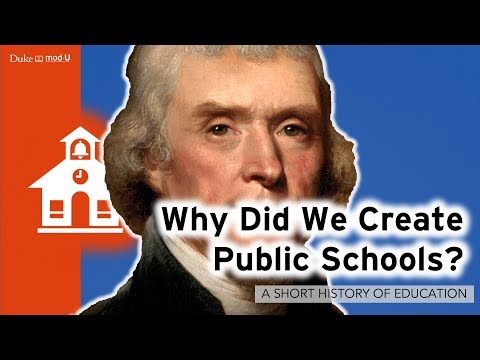
Why Did We Create Public Schools?: A Short History of Education
93
TRUST
What it says
- Distinguishes 'schooling' from 'education' and outlines historical rationales for U.S. public schools
- Cites Benjamin Rush's civic virtue argument and quotes his proposal directly
- Discusses Thomas Jefferson's meritocratic vision and its link to modern elite university admissions
- Explains social stability and social mobility rationales tied to industrialization and the closing of the frontier
- Covers economic efficiency as a rationale, referencing Horace Mann's 1840s legislative argument
- Uses a Socratic dialogue format with hypothetical student questions to explore counterarguments
What's missing
- The literacy statistic (85% vs 60%) is stated without citing a specific historical source or study
- Historical claims about Rush, Jefferson, and Mann rely on the lecturer's authority without named academic sources or texts
- No mention of counter-historical perspectives or scholarly debate on these rationales beyond the instructor's framing
Manipulation tactics detected
TRANSPARENCYLOW
UNATTRIBUTED_CLAIM
The specific literacy comparison statistic (85% vs 60%) is presented as fact without citing a historical source, study, or dataset.
Source check
During the American Revolution about 85% of white males in New England were literate compared to only about 60% in Old England
UNVERIFIEDMEDIUM confidence
Sources strongly support the 85% New England male literacy figure but none provide comparative data for 'Old England' at 60%, leaving the comparative claim unverified.
What you should do
- Cross-check specific historical statistics like the literacy rates with primary sources or academic texts on colonial American education
- Treat this as an educational lecture reflecting one instructor's synthesis of historical rationales, not a peer-reviewed academic paper
- Seek out primary documents (e.g., Rush's actual writings, Jefferson's Virginia education plan) for direct verification of quoted material
Veralyze reads a video's transcript for unverified claims, missing context and manipulation, then gives a trust score. Learn more